users online
 
Contact me

TOSHIMA, TOKYO, JAPAN

My YOUTUBE video of TOKYO

Toshima is one of the 23 special wards of Tokyo, Japan. Located in the north-west corner of the ward area, Toshima is bordered by the cities of Nerima, Itabashi, and Kita in the north, and Shinjuku and Bunkyo in the south.
The ward was founded on March 15, 1947 and reached a peak resident population of 370,000 in 1965. The population has continued to decline and as of December 1, 2005, the ward had an estimated population of 252,011 with a density of 19,370 persons per km². During the day the population swells with commuters, resulting in a daytime population of around 430,000.

The total land area of Toshima is 13.01 km², sitting on a moderate plateau with a difference of 28 m between the ward's highest and lowest points. Approximately 47% of Toshima's land is residential, and 20% is commercial and public areas.

Though Toshima is a ward, it refers to itself as a city. The ward offices are located in Ikebukuro, which is also the commercial and entertainment center of Toshima.

With a non-Japanese population of 15,516, or 6.16% of the total, Toshima is one of the most international wards in Tokyo. Of the foreign population, 56% is of Chinese descent, 20% is of Korean descent, followed by Filipinos.

Toshima was formed in 1932 by the merger of four towns, Sugamochō, Nishi-sugamochō, Takadachō, and Nagasakichō, bordered by the quickly expanding former city of Tokyo.

The area evolved from a suburban agricultural district in the Edo period to the urban commercial center that it is today. The growth was fueled by the construction of various rail lines built in the Meiji and Taishō period.

The former Somei village, now part of Toshima, is the birthplace of the Somei Yoshino, Japan's most popular variety of sakura (cherry blossom tree). The variety was developed at the end of the Edo period.

TAITO, TOKYO, JAPAN

My YOUTUBE video of TOKYO

Taitō is one of the 23 special wards of Tokyo, Japan. In English, it calls itself Taito City.

As of 2008, the ward has an estimated population of 175,346 and a density of 15,890 persons per km². The total area is 10.08 km².

SUMIDA, TOKYO, JAPAN


My YOUTUBE video of TOKYO

Sumida is one of the 23 special wards of Tokyo, Japan. It calls itself Sumida City in English.

As of 2008, the ward has an estimated population of 240,296 and a density of 17,480 persons per km². The total area is 13.75 km².

Sumida maintains sister-city relationships with Seodaemun-gu, Seoul, South Korea; and with Shijingshan District, Beijing, People's Republic of China.

Landmarks

• Tokyo Sky Tree - NHK and other broadcasters have proposed a new tower, which, when completed, will be the tallest freestanding tower in the world and the tallest man-made structure in Japan. It is currently scheduled for completion in 2011, when all of Japan will have switched to digital terrestrial television.
• Ryōgoku Kokugikan (National Sumo Stadium)
• Edo-Tokyo Museum
• Asahi Breweries Headquarters: The Asahi Beer Hall with the Asahi flame created by French designer Philippe Starck in 1989, is one of Tokyo's most recognizable modern structures.
• Eko-in, Buddhist temple
• Honjo Matsuzaka-cho Park: the residence of Kira Yoshinaka stood on this site. The Forty-seven Ronin took his life during the Genroku era.
• Hokusai-dori (street), with a series of prints by famed Japanese artist Hokusai who was born in the Kamezawa area of Sumida.
• Tobu Museum
• Tokyo Irei-do (Tokyo Memorial Hall): a memorial to those unidentified people who died in the Great Kantō Earthquake, the Bombing of Tokyo in World War II and other catastrophes

SUGINAMI, TOKYO, JAPAN

My YOUTUBE video of TOKYO

Suginami is one of the 23 special wards of Tokyo, Japan. In English, it calls itself Suginami City.


As of 2008, the ward has an estimated population of 536,657 and a density of 15490 persons per km². The total area is 34.02 km².

Suginami occupies the western part of the ward area of Tokyo. Its neighbors include these special wards: to the east, Shibuya and Nakano; to the north, Nerima; and to the south, Setagaya. Its western neighbors are the cities of Mitaka and Musashino.

The Kanda river passes through Suginami. The Zenpukuji river originates from Zenpukuji Park in western Suginami, and the Myoshoji river originates in Myoshoji Park, to the north of Ogikubo station.

The center of population of Tokyo lies in Omiya 1-chome in Suginami.

SHINJUKU, TOKYO, JAPAN

My YOUTUBE video of TOKYO


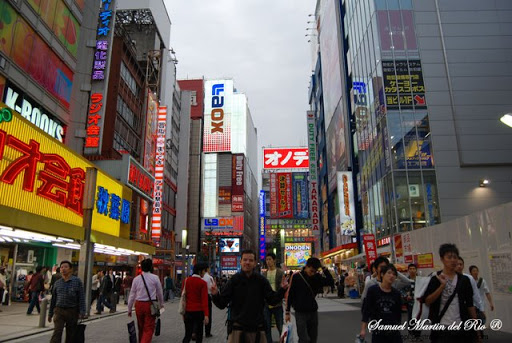
Shinjuku is one of the 23 special wards of Tokyo, Japan. It is a major commercial and administrative center, housing the busiest train station in the world (Shinjuku Station), and the Tokyo Metropolitan Government Building, the administration center for the government of Tokyo.

Surrounding Shinjuku Station are department stores, specialist electronic and camera shops, cinemas, restaurants and bars. Many international hotels are located here.

As of 2008, the ward has an estimated population of 312,418 and a density of 17,140 persons per km². The total area is 18.23 km².

Shinjuku has the highest numbers of registered foreign nationals of any community in Tokyo. As of October 1, 2005, 29,353 non-Japanese with 107 different nationalities were registered in Shinjuku.

In 1634, during the Edo period, as the outer moat of the Edo Castle was built, a number of temples and shrines moved to the Yotsuya area on the western edge of Shinjuku. In 1698, Naitō Shinjuku had developed as a new (shin) station (shuku or juku) on the Kōshū Kaidō, one of the major highways of that era. Naitō was a daimyo whose mansion stood in the area; his land is now a public park, the Shinjuku Gyoen.

Shinjuku began to develop into its current form after the Great Kantō earthquake in 1923, since the seismically stable area largely escaped the devastation. Consequently, West Shinjuku is one of the few areas in Tokyo with many skyscrapers.

The Tokyo air raids from May to August 1945 destroyed almost 90% of the buildings in the area in and around Shinjuku Station. The pre-war form of Shinjuku, and the rest of Tokyo, for that matter, was retained after the war because the roads and rails, damaged as they were, remained, and these formed the heart of the Shinjuku in the post-war construction. Only in Kabuki-cho was a grand reconstruction plan put into action.
The present ward was established on March 15, 1947, with the merger of the former wards of Yotsuya, Ushigome, and Yodobashi.

In 1991, the Tokyo Metropolitan Government moved from the Marunouchi district of Chiyoda to the current building in Shinjuku.

Surrounding Shinjuku are six other wards: Chiyoda to the east; Bunkyo and Toshima to the north; Nakano to the west, and Shibuya and Minato to the south. In addition, Nerima is only a hundred meters away. The highest point in Shinjuku is Hakone Hill, 44.6 m, in Toyama Park east of Takadanobaba and Shin-Okubo stations. The lowest point is 4.2 m in the Iidabashi area.

SHINAGAWA, TOKYO, JAPAN

My YOUTUBE video of TOKYO

Shinagawa is one of the 23 special wards of Tokyo, Japan. In English, it calls itself Shinagawa City. The ward is home to nine embassies.


As of 2008, the ward has an estimated population of 344,461 and a density of 15740 persons per km². The total area is 22.72 km².


Most of Tokyo east of the Imperial Palace is reclaimed land. A large portion of reclamation happened during the Edo period. The ward was founded on March 15, 1947, through the administrative amalgamation of the former Ebara Ward with the former Shinagawa Ward. Both Ebara Ward and Shinagawa Ward had been created in 1932, with the outward expansion of the municipal boundaries of the Tokyo City following the 1923 Great Kantō Earthquake.

In the Edo period, Shinagawa was the first post town a traveler would reach after setting out from Nihombashi on the Tōkaidō highway from Edo to Kyoto. The post-town function is retained today with several large hotels near the train station offering 6,000 hotel rooms, the largest concentration in the city. The Tokugawa shogunate maintained the Suzugamori execution grounds in Shinagawa. The Tōkaidō Shinkansen began serving Shinagawa Station from 2003, and the nearby Shinagawa Intercity office complex will be served by a new subway station in a few years' time.
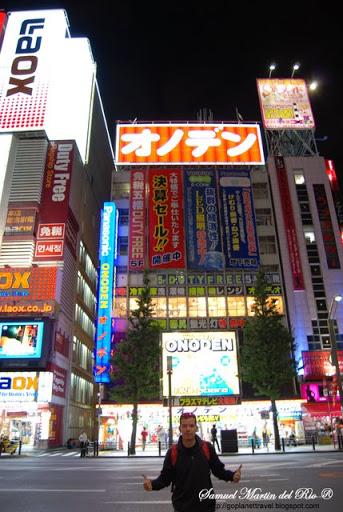
Shinagawa includes natural uplands and lowlands, as well as reclaimed land. The uplands are the eastern end of the Musashino hills. They include Shiba Shiroganedai north of the Meguro River, Megurodai between the Meguro and Tachiai Rivers, and Ebaradai south of the Tachiai River.

The ward lies on Tokyo Bay. Its neighbors on land are all special wards of Tokyo: Kōtō to the east, Minato to the north, Meguro to the west, and Ōta to the south.

SHIBUYA, TOKYO, JAPAN

My YOUTUBE video of TOKYO

Shibuya is one of the 23 special wards of Tokyo, Japan. As of 2008, it had an estimated population of 208,371 and a density of 13,540 persons per km². The total area is 15.11 km².


The name "Shibuya" is also used to refer to the central business district of Shibuya Ward, which surrounds Shibuya Station, one of Tokyo's busiest railway stations. Shibuya is known as one of the fashion centers of Japan, particularly for young people, and as a major nightlife area.

Following the opening of the Yamanote Line in 1885, Shibuya began to emerge as a railway terminal for southwestern Tokyo and eventually as a major commercial and entertainment center. It was incorporated as a village in 1889, as a town in 1909, as a ward of Tokyo City in 1932, and as a ward of Tokyo Metropolis in 1943. The present-day special ward was established on March 15, 1947.

One of the most well-known stories concerning Shibuya is the story of Hachikō, a dog who waited on his late master at Shibuya Station every day from 1923 to 1935, eventually becoming a national celebrity for his loyalty. A statue of Hachikō was built adjacent to the station, and the surrounding Hachikō Square is now the most popular meeting point in the area.
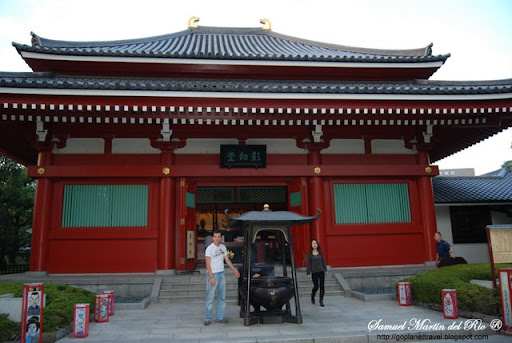
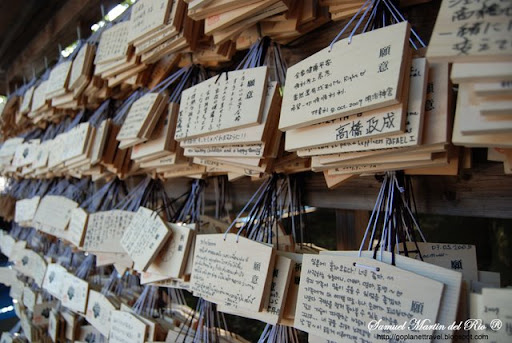
Yoyogi Park in Shibuya was one of the main venues for the 1964 Summer Olympics.

In 1965, 18-year-old Misao Katagiri, who had already shot and killed a policeman, went on a shooting rampage, and injured 16 more people. He was sentenced to death and was executed by hanging in 1972.

Shibuya has achieved great popularity among young people in the last 30 years. There are several famous fashion department stores in Shibuya. Shibuya 109 is a major shopping center near Shibuya Station, particularly famous as the origin of the kogal subculture. Called "Ichi-Maru-kyÅ«," which translates as 1–0–9 in Japanese, the name is actually a pun on that of the corporation that owns it — Tokyu (which sounds like 10–9 in Japanese). The contemporary fashion scene in Shibuya extends northward from Shibuya Station to Harajuku, where youth culture reigns; Omotesandō, the zelkova tree- and fashion brand-lined street; and Sendagaya, Tokyo's apparel design district.

During the late 1990s, Shibuya also became known as the center of the IT industry in Japan. It was often called "Bit Valley" in English, a pun on "Bitter Valley," the literal translation of "Shibuya."

SETAGAYA, TOKYO, JAPAN

My YOUTUBE video of TOKYO

Setagaya is one of the 23 special wards of Tokyo, Japan. It is also the name of a neighborhood within the ward. The ward calls itself the City of Setagaya in English. Its official bird is the Azure-winged Magpie, its flower the Fringed Orchid, and its tree the Zelkova serrata.


It has the largest population and second largest area (after Ōta) of Tokyo's 23 special wards.

The special ward of Setagaya was founded on March 15, 1947.


During the Edo period, 42 villages occupied the area. With the abolition of the han system in 1871, the central and eastern portions became part of Tokyo Prefecture while the rest became part of Kanagawa Prefecture; in 1893, some areas were transferred to Tokyo Prefecture. With the establishment of Setagaya Ward in the old Tokyo City in 1932, and further consolidation in 1936, Setagaya took its present boundaries.

Setagaya has sister-city relationships with Winnipeg, Manitoba in Canada; the Dƶbling district of Vienna, Austria; and Bunbury, Western Australia.

NERIMA, TOKYO, JAPAN

My YOUTUBE video of TOKYO

Nerima is one of the 23 special wards of Tokyo, Japan. In English, it calls itself Nerima City.

Nerima has a sister-city relationship with Ipswich, Queensland, Australia. Nerima Gardens in Ipswich commemorates the tie. Nerima also has a similar link to Haidian District, Beijing, People's Republic of China.


As of August 1, 2007, the ward has an estimated population of 703,005 (323,296 households), and a density of 14,443 persons per km². 12,897 foreign residents are registered in the ward. 18.4% of the ward's population is over the age of 65. The total area is 48.16 km².


In the Edo period, the area was mostly farmland producing daikon radishes, gobo burdocks, and potatoes. After the 1923 Kanto earthquake, many people from central Tokyo moved to the area.

Prior to the creation of the ward on August 1, 1947, the area had been part of Itabashi. In 1952, the Japan Self-Defense Forces established a base there. The first division of the eastern group of the Ground Self-Defense Force has its headquarters there. The United States Forces Japan already had a base, Grant Heights, which it returned to Japanese control in 1973. Grant Heights had been Narimasu airfield under the Imperial Japanese Army until the end of World War II. The runway is now the main street in front of the IMA department store in Hikarigaoka.

NAKANO, TOKYO, JAPAN

My YOUTUBE video of TOKYO

Nakano is one of the 23 special wards of Tokyo, Japan. In English, it calls itself Nakano City.


As of 2005, the ward has an estimated population of 297,998 and a density of 19,110 persons per km². The total area is 15.59 km².

The ward was founded on October 1, 1932 when the towns of Nogata and Nakano were absorbed into the former Tokyo City as Nakano Ward. The present administration dates from March 15, 1947 when the Allied occupation reformed the administration of Tokyo-to.
• 1447: Ōta Dōkan defeated Toshima Yasutsune in a battle here.
• 1606: The Naruki Kaidō, predecessor of today's Ōme Kaidō (a road to Ōme) was established.
• 1695: In connection with the Shorui Awaremi no Rei (a law for the protection of animals), a facility for keeping wild dogs opened.
• 1871: The twelve villages that comprise present-day Nakano became part of Tokyo Prefecture.
• 1889: The Kofu Railway opens. The forerunner of today's Chūō Main Line included a station at Nakano en route from Shinjuku to Hachioji.
• 1897: Nakano becomes a village.
• 1932: Tokyo City expands to encompass the district that included Nakano.
• 1943: With the abolition of Tokyo City, Nakano becomes part of Tokyo-to.
• 1947: Nakano becomes one of the special wards under the new system.
• 1961: The Tokyo subway system extends to Nakano.
• 1973: Construction of Nakano Sun Plaza near Nakano Station reaches completion.

MINATO, TOKYO, JAPAN

My YOUTUBE video of TOKYO


Minato is one of the 23 special wards of Tokyo, Japan. As of 1 March 2008, it had an official population of 217,335 and a density of 10,865 persons per km². The total area is 20.34 km².

Minato hosts 49 embassies. It is also home to various companies, including Honda, Mitsubishi Heavy Industries, Ltd., Mitsubishi Motors Corporation, NEC, Sony, Fujitsu and Toshiba.

MEGURO, TOKYO, JAPAN

My YOUTUBE video of TOKYO


Meguro is one of the 23 special wards of Tokyo, Japan. It calls itself Meguro City in English.

Meguro hosts fifteen foreign embassies and consulates. One of Tokyo's most exclusive residential neighborhoods (Kakinokizaka) is located in Meguro.

As of December 31, 2007, the ward has an estimated population of 259,968 and a density of 17,685 persons per km². The total area is 14.70 km².

KOTO, TOKYO, JAPAN

My YOUTUBE video of TOKYO


Kōtō is one of the 23 special wards of Tokyo, Japan. As of 2008, the ward has an estimated population of 442,271 and a density of 11,070 persons per km². The total area is 39.48 km². The ward refers to itself as Kōtō City in English.

Kōtō is located east of the Tokyo metropolitan center, bounded by the Sumidagawa to the west and the Arakawa to the east. Its major districts include Kameido, Kiba, Kiyosumi, Monzen-nakachō, Shirakawa, and Toyosu. The newly developed waterfront area of Ariake is in Kōtō, as is part of Odaiba.

The western part of the ward was formerly part of Fukagawa Ward of Tokyo City. It suffered severe damage in the Great Kantō Earthquake and was heavily bombed during World War II.

The special ward was founded on March 15, 1947 by the merger of the wards of Fukagawa and Jōtō.

KITA, TOKYO, JAPAN

My YOUTUBE video of TOKYO


Kita is one of the special wards of Tokyo, Japan. In English, it calls itself the City of Kita.

As of 2008, the ward has an estimated population of 332,140 and a density of 16,140 persons per km². The total area is 20.59 km².

KATSUSHIKA, TOKYO, JAPAN

My YOUTUBE video of TOKYO


Katsushika is one of the special wards of Tokyo, Japan. It lies in the northeast of the ward area. The ward calls itself Katsushika City in English.

As of 2008, the ward has an estimated population of 429,289 and a density of 12,600 people per km². The total area is 34.84 km².

Katsushika has sister-city relationships with Fengtai District in Beijing, People's Republic of China, and with Floridsdorf, a district of Vienna, Austria.

The Shibamata Taishaku-ten Nichiren Buddhist temple is in Katsushika.

On October 1, 1932, the former Katsushika District of what was then known as Tokyo Prefecture, and its seven towns and villages, merged and became part of the old Tokyo City.

The special ward was founded on March 15, 1947.

Katsushika contains the famous Narihira Santosen Temple, and the "Bound Jizō" of Ōoka Echizen fame.

ITABASHI, TOKYO, JAPAN

My YOUTUBE video of TOKYO

Itabashi is one of the 23 special wards of Tokyo, Japan. In English, it calls itself Itabashi City. Itabashi has sister-city relations with Burlington, Ontario in Canada; Shijingshan District in Beijing, People's Republic of China; and Bologna in Italy.

As of 2008, the ward has an estimated population of 531,793 and a density of 16,270 persons per km². The total area is 32.17 km².

The name of the ward means "plank bridge" and derives from the wooden span over the Shakujii River that dates from the Heian period. Such a bridge was remarkable at the time, and the name has lasted since. In the Edo period, the Nakasendō crossed the nearby Shimo Itabashi, and the name came to apply to that area as well. Itabashi was one of the Four Edo Post Towns, and travellers first lodged there after leaving the shogunal capital. The Kaga domain had a mansion there. The shogunate maintained the Itabashi execution grounds at Itabashi.

On October 1, 1932, nine towns and villages of Kita-Toshima District merged and became part of Tokyo City as Itabashi Ward. It became a special ward May 3, 1947. On August 1 of that year, Nerima was split off from Itabashi.

EDOGAWA, TOKYO, JAPAN

My YOUTUBE video of TOKYO

Edogawa is one of the 23 special wards of Tokyo, Japan. It takes its name from the river that runs from north to south along the eastern edge of the ward. In English, it uses the name Edogawa City.

The easternmost of the wards, it shares boundaries with the cities of Urayasu and Ichikawa in Chiba Prefecture (to the east) and with the wards of Katsushika (to the north), Sumida and Kōtō (to the west). It meets the city of Matsudo in Chiba at a point.

Edogawa has a sister-city relationship with Gosford, New South Wales, Australia. Domestically, it has friendship ties with the cities of Azumino in Nagano Prefecture and Tsuruoka in Yamagata Prefecture.

As of 2008, the ward has an estimated population of 671,937 and a density of 13,260 persons per km². The total area is 49.86 km².

The ward was founded in 1937 with the merger of seven towns and villages in Minami Katsushika District: the towns of Komatsugawa and Koiwa and the villages of Kasai, Shinozaki, Matsue, Mizue and Shikamoto.

CHUO, TOKYO, JAPAN

My YOUTUBE video of TOKYO

Chūō is one of the 23 special wards that form the heart of Tokyo, Japan. The ward refers to itself as Chūō City in English.

Its Japanese name literally means "Central Ward," and it is historically the main commercial center of Tokyo, although Shinjuku has risen to challenge it since the end of World War II. The most famous district in Chūō is Ginza , built on the site of a former silver mint from which it takes its name. The gold mint, or Kinza, formerly occupied the site of the present-day Bank of Japan headquarters building, also in Chūō.

As of 2008, the ward has an estimated resident population of 108,943 and a density of 9654 persons per km². However, because of the concentration of businesses, offices and retail space, the daytime population swells to an estimated 650,000.

1612: Shogun Tokugawa Ieyasu, planning to establish Edo as the de facto capital of Japan, begins work on a new commercial district surrounding the eastern end of the Tōkaidō, the main road connecting Tokyo and the Kansai region. During the Edo period this area is known as Edomachi - the town center of Edo. Much of the area (particularly Ginza and Tsukiji) was loose sand piled at the delta of the Sumida River before being filled in by the shogunate.
1657: After a fire consumes much of the city, the area is re-planned with more canals to accommodate more maritime commerce.
1869: A foreigners' settlement is established in Tsukiji. It continues until about 1899.
1872: A fire consumes much of the Ginza area. In its aftermath, the governor of Tokyo re-plans Ginza to be a modern European-style commercial district between Shinbashi (the city's main railway terminal at the time) to the south and Nihombashi (the main business and financial district) to the north.
1878: Under a new local organization statute, the wards of Nihonbashi and Kyobashi are established under the government of Tokyo City, covering the area now occupied by Chūō.
1945: Following Japan's defeat in World War II, several buildings are taken over by SCAP to serve as supply centers for the occupation forces. These include the Hattori Watch Company, the Matsuya department store and the Toshiba Building. The buildings are returned to Japanese civilian control by 1951.
1947: Chūō Ward is founded on March 15 under the new Local Autonomy Law.

CHIYODA, TOKYO, JAPAN

My YOUTUBE video of TOKYO

Chiyoda is one of the 23 special wards in central Tokyo, Japan. In English, it calls itself Chiyoda City. As of October 2007, the ward has an estimated population of 45,543 and a density of 3,912 persons per km², making it by far the least populated of the special wards. The total area is 11.64 km², of which the Imperial Palace takes up 12 percent.

Chiyoda consists of the Palace and a surrounding radius of about 1 kilometer. It inherited the name, literally meaning "field of a thousand generations," from Chiyoda Castle. Many government institutions, such as the Diet, Prime Minister's residence, and Supreme Court, are located in Chiyoda, as are Tokyo landmarks such as Yasukuni Shrine, Tokyo Station, and the Budokan. Fifteen embassies are located in Chiyoda.

The Chiyoda ward was created on March 15, 1947 by the unification of Kanda Ward and Kōjimachi Ward . It has been a site of a number of historical events.

In 1860, the assassination of Ii Naosuke took place outside the Sakurada Gate of the Imperial Palace.
In 1932, assassins attacked and killed prime minister Inukai Tsuyoshi.
In 1936, an attempted coup d'Ʃtat, the February 26 Incident, occurred.
In 1995, members of Aum Shinrikyo carried out the Sarin gas attack on the Tokyo subway.

BUNKYO, TOKYO, JAPAN

My YOUTUBE video of TOKYO

Bunkyō is one of the 23 special wards of Tokyo, Japan. Situated in the middle of the ward area, Bunkyō is a residential and educational center. Beginning in the Meiji period, literati like Natsume Sōseki, as well as scholars and politicians have lived there. The publishing, printing, and leading-edge medical-care industries are important in the economy of Bunkyō. Most recently, the information and IT industries have flourished. Bunkyō is home to large hospitals, the Tokyo Dome, judo's Kodokan, and the University of Tokyo.

Bunkyō has a sister-city relationship with Kaiserslautern in the Rhineland-Palatinate of Germany.

As of November, 2005 the ward has a population of 180,209, including about 6,500 foreign residents, and a density of 15,930 persons per km². The total area is 11.31 km².

The ward was founded on March 15, 1947.

Landmarks
• Gokokuji Temple
• Denzuin Temple
• Harimasaka Sakura Colonnade
• Kodokan Judo Institute
• Koishikawa Botanical Garden
• Orugoru no Chiisana Hakubutsukan
• Koishikawa Kōrakuen
• Tokyo Dome City
• Nezu Shrine
• Nippon Medical School
• Rikugien Garden
• Tokyo Cathedral (St. Mary's Cathedral)
• Tokyo Dome
• Toyo University
• University of Tokyo
• Yanaka Cemetery
• Yayoi Museum • Yushima Seidō

ARAKAWA, TOKYO, JAPAN

My YOUTUBE video of TOKYO

Arakawa is a special ward located in Tokyo, Japan. The ward takes its name from the river, the Arakawa. Its neighbors are the wards of Adachi, Kita, Bunkyo, Taito and Sumida. In English, the ward calls itself Arakawa City.

Arakawa has sister-city relationships with Donaustadt in Vienna, Austria, and with Corvallis, Oregon, U.S. Domestically, it has similar relationships with nine cities, towns and villages.

As of April 1, 2008, the ward has an estimated population of 197,716 and a population density of about 18,800 persons per km². The total area is 10.20 km².

The area was mainly agricultural in the Edo period. In 1651, Kozukappara, the Tokugawa's largest execution ground (now located next to Minami-Senju station), was built. Beginning in the Meiji era, the area became industrial as factories were built on the water front.

In 1932, it became one of the 35 wards of Tokyo City.

ADACHI, TOKYO, JAPAN

My YOUTUBE video of TOKYO

Adachi is one of the special wards of Tokyo, Japan. It is located north of the heart of Tokyo. The ward consists of two separate areas: a small strip of land between the Sumida River and Arakawa River and a larger area north of the Arakawa River. The ward is bordered by the cities of Kawaguchi, Hatogaya, Sōka and Yashio in Saitama and Katsushika, Sumida, Arakawa and Kita in Tokyo.

The ward is called Adachi City in English.

Adachi has sister-city relationships with Belmont, Australia. Within Japan, Adachi has similar ties with the city of Uonuma in Niigata Prefecture, Yamanouchi in Nagano Prefecture, and the city of Kanuma in Tochigi Prefecture.

As of April 1, 2008, the ward has an estimated population of 654,466 and a density of 12,140 persons per km². The total area is 53.20 km².

The Adachi Land Transportation Office is located here, and automobiles registered at this office bear Adachi number plates.

Under the Ritsuryō system, the present-day ward was the southern extremity of Adachi District, Musashi Province. In 826, during the Heian period, the Nishiarai Daishi temple was founded. During the Muromachi period and into the Sengoku period, the Chiba clan held control of the region. The Great Senju Bridge was built in 1594. In the Edo period, parts were under the direct control of the Tokugawa shogunate, and parts were under the administration of Kan'ei-ji, a temple in present-day Ueno, Tokyo. Adachi was also home to Senju-shuku was a post station on both the Nikkō Kaidō and the Mito Kaidō. The shogunate maintained the Kozukappara execution grounds in Senju. In 1932, Adachi became a ward of Tokyo City. The special ward was founded on March 15, 1947.


October 2009

OTA, TOKYO, JAPAN

My YOUTUBE video of TOKYO

Ōta is one of the 23 special wards of Tokyo, Japan. As of 2008, the ward has an estimated population of 677,341 and a density of 11,360 persons per km². The total area is 59.46 km², the largest of the 23 special wards.

Ōta's hub is situated around the two Kamata Stations (JR Kamata and Keikyu Kamata) where the Ōta Ward Office and central Post Office can be found.

Ōta has a sister city relationship with Salem, Massachusetts. The discovery of a shell mound in Ōmori, one of the forerunners of Ōta, by Edward S. Morse, director of the museum in Salem, occasioned the tie. Ōta has a friendship link with Chaoyang District, Beijing, People's Republic of China.

The ward was founded on March 15, 1947 merging the old wards of Ōmori and Kamata.

Tokyo International Airport (Haneda Airport, HND), now the main domestic airport for the Greater Tokyo Area, began with the establishment of Haneda Airfield in 1931 in the town of Haneda, Ebara District of Tokyo Prefecture. In 1945, it became Haneda Army Air Base under the control of the United States Army. In the same year, the Occupation ordered the expansion of the airport, evicting people from the surroundings on 48 hours' notice. With the end of the occupation, the Americans returned part of the facility to Japanese control in 1952, completing the return in 1958. Haneda Airport in Ōta was the major international airport for Tokyo, and handled traffic for the Tokyo Olympics.


October 2009


------------------------------------------------------------------------------------------------------ MUCH MORE ------------------------------------------------------------------------------------------------------
Packing List

Subway Maps

Currency Exchange

View Guestbook Sign Guestbook Weather Transportation Accomodation Maps