users online
 
Contact me

BOSTON, MASSACHUSETTS

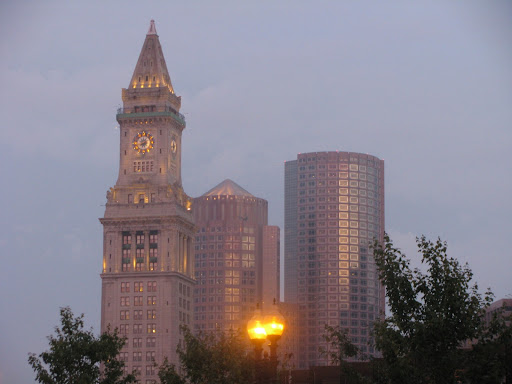
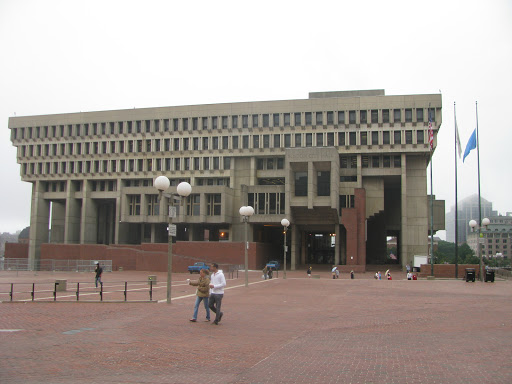
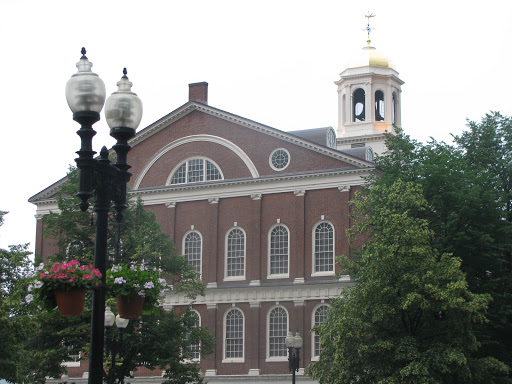
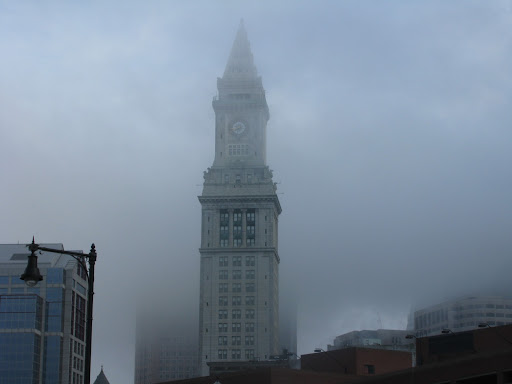
Boston is the capital and largest city of the Commonwealth of Massachusetts, and is one of the oldest cities in the United States. The largest city in New England, Boston is considered the economic and cultural center of the region and is sometimes regarded as the unofficial "Capital of New England". Boston city proper had a 2008 estimated population of 609,023, making it the twenty-second largest in the country. Boston is also the anchor of a substantially larger metropolitan area called Greater Boston, home to 4.5 million people and the tenth-largest metropolitan area in the country. Greater Boston as a commuting region includes seven Massachusetts counties, all of Rhode Island and parts of New Hampshire; it is home to 7.5 million people, making it the fifth-largest Combined Statistical Area in the United States.

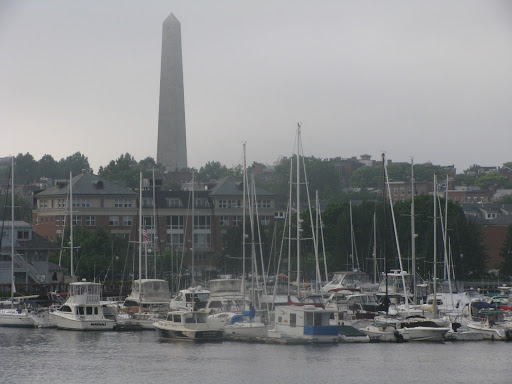
In 1630, Puritan colonists from England founded the city on the Shawmut Peninsula. During the late 18th century, Boston was the location of several major events during the American Revolution, including the Boston Massacre and the Boston Tea Party. Several early battles of the American Revolution, such as the Battle of Bunker Hill and the Siege of Boston, occurred within the city and surrounding areas. Through land reclamation and municipal annexation, Boston has expanded beyond the peninsula. After American independence was attained Boston became a major shipping port and manufacturing center, and its rich history now helps attract 16.3 million visitors annually. The city was the site of several firsts, including America's first public school, Boston Latin School (1635), and first college, Harvard College (1636), in neighboring Cambridge. Boston was also home to the first subway system in the United States.
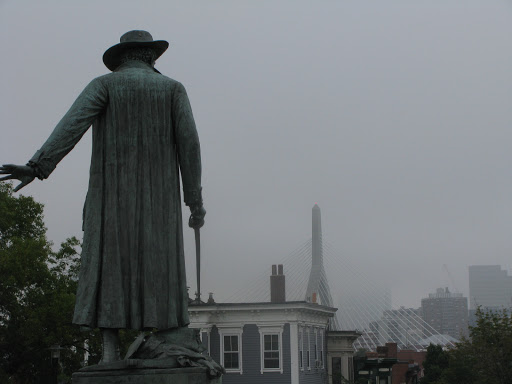
With many colleges and universities within the city and surrounding area, Boston is a center of higher education and a center for medicine. The city's economy is also based on research, electronics, engineering, finance, and technology—principally biotechnology. Boston ranks first in the country in jobs per square mile ahead of New York City and Washington, D.C. The city has been experiencing gentrification and has one of the highest costs of living in the United States, and it remains high on world livability rankings.

Boston was founded on September 17, 1630, by Puritan colonists from England. The Puritans of the Massachusetts Bay Colony are sometimes confused with the Pilgrims, who founded Plymouth Colony ten years earlier in what is today Bristol County, Plymouth County, and Barnstable County, Massachusetts. The two groups, which differed in religious practice, are historically distinct. The separate colonies were not united until the formation of the Province of Massachusetts Bay in 1691.

The Shawmut Peninsula was connected to the mainland by a narrow isthmus and was surrounded by the waters of Massachusetts Bay and the Back Bay, an estuary of the Charles River. Several prehistoric Native American archaeological sites that were excavated in the city have shown that the peninsula was inhabited as early as 5,000 BC. Boston's early European settlers first called the area Trimountaine, but later renamed the town after Boston, Lincolnshire, England, from which several prominent colonists had emigrated. Massachusetts Bay Colony's original governor, John Winthrop, gave a famous sermon entitled "A Model of Christian Charity," popularly known as the "City on a Hill" sermon, which espoused the idea that Boston had a special covenant with God. Puritan ethics molded a stable and well-structured society in Boston. For example, shortly after Boston's settlement, Puritans founded America's first public school, Boston Latin School (1635), and America's first college, Harvard College (1636). Boston was the largest town in British North America until Philadelphia grew larger in the mid-18th century.

In the 1770s, British attempts to exert more-stringent control on the thirteen colonies prompted Bostonians to initiate the American Revolution. The Boston Massacre, the Boston Tea Party, and several early battles occurred in or near the city. During this period, Paul Revere made his famous midnight ride. After the Revolution, Boston had become one of the world's wealthiest international trading ports because of the city's consolidated seafaring tradition. Exports included rum, fish, salt, and tobacco. During this era, descendants of old Boston families were regarded as the nation's social and cultural elites; they were later dubbed the Boston Brahmins.
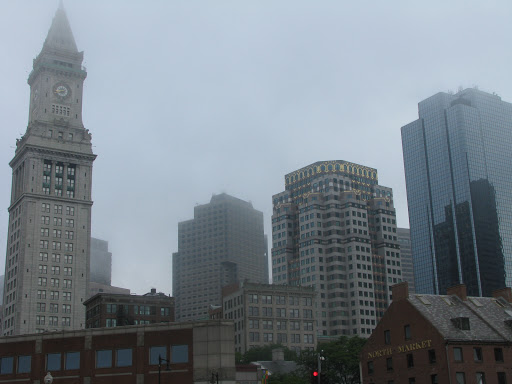
The Embargo Act of 1807, adopted during the Napoleonic Wars, and the War of 1812 significantly curtailed Boston's harbor activity. Although foreign trade returned after these hostilities, Boston's merchants had found alternatives for their capital investments in the interim. Manufacturing became an important component of the city's economy, and by the mid-1800s, the city's industrial manufacturing overtook international trade in economic importance. Until the early 1900s, Boston remained one of the nation's largest manufacturing centers and was notable for its garment production and leather-goods industries. A network of small rivers bordering the city and connecting it to the surrounding region made for easy shipment of goods and led to a proliferation of mills and factories. Later, a dense network of railroads facilitated the region's industry and commerce. From the mid-19th to late 19th century, Boston flourished culturally. It became renowned for its rarefied literary culture and lavish artistic patronage. It also became a center of the abolitionist movement. The city reacted strongly to the Fugitive Slave Law of 1850, which contributed to President Franklin Pierce's attempt to make an example of Boston after the Burns Fugitive Slave Case.

Between 1631 and 1890, the city tripled its physical size by land reclamation—by filling in marshes, mud flats, and gaps between wharves along the waterfront —a process that Walter Muir Whitehill called "cutting down the hills to fill the coves." The largest reclamation efforts took place during the 1800s. Beginning in 1807, the crown of Beacon Hill was used to fill in a 50-acre (20 ha) mill pond that later became the Haymarket Square area. The present-day State House sits atop this lowered Beacon Hill. Reclamation projects in the middle of the century created significant parts of the South End, the West End, the Financial District, and Chinatown. After The Great Boston Fire of 1872, workers used building rubble as landfill along the downtown waterfront. During the mid-to-late 19th century, workers filled almost 600 acres (2.4 km²) of brackish Charles River marshlands west of the Boston Common with gravel brought by rail from the hills of Needham Heights. Also, the city annexed the adjacent towns of Roxbury (1868), Dorchester (1870), Brighton, West Roxbury (including present day Jamaica Plain, Roslindale, and West Roxbury), and Charlestown. The last three towns were annexed in 1874. Other towns include Hyde Park, Mattapan, and East Boston.

By the 1970s, the city's economy boomed after 30 years of economic downturn. Hospitals such as Massachusetts General Hospital, Beth Israel Deaconess Medical Center, and Brigham and Women's Hospital led the nation in medical innovation and patient care. Schools such as Harvard University, MIT, Tufts University, Boston University, Boston College, Boston Conservatory, and Northeastern University attracted students to the area. Nevertheless, the city experienced conflict starting in 1974 over desegregation busing, which resulted in unrest and violence around public schools throughout the mid-1970s. In 1984, the City of Boston gave control of the Columbia Point public housing complex to a private developer, who redeveloped and revitalized the property from its rundown and dangerous state into an attractive residential mixed-income community called Harbor Point Apartments, which opened in 1988 and was completed by 1990. It was the first federal housing project to be converted to private, mixed-income housing in the United States, and served as a model for the federal HUD HOPE VI public housing revitalization program that began in 1992.


June 2009

MASSACHUSETTS, UNITED STATES

Places where I have been in Massachusetts:

Boston

The Commonwealth of Massachusetts is a state in the New England region of the northeastern United States. It is bordered by Rhode Island and Connecticut to the south, New York to the west, and Vermont and New Hampshire to the north; at its east lies the Atlantic Ocean. Most of its population of 6.4 million lives in the Boston metropolitan area. The eastern half of the state is made up of urban, suburban, and rural areas, while Western Massachusetts is mostly rural. Massachusetts is the most populous of the six New England states. It ranks third among U.S. states in GDP per capita.

Massachusetts has been significant throughout American history. Plymouth was the second permanent English settlement in North America. Many of Massachusetts's towns were founded by colonists from England in the 1620s and 1630s. During the eighteenth century, Boston became known as the "Cradle of Liberty" for the agitation there – Ralph Waldo Emerson later called it the Shot heard round the world—which led to the American Revolution and the independence of the United States from Great Britain. In the late eighteenth century, Massachusetts was the first U.S. state to abolish slavery. Also, it was a center of the temperance movement and abolitionist activity before the American Civil War. In 2004, Massachusetts became the first U.S. state to legally recognize same-sex marriage. The state has contributed many prominent politicians to national service, including the Adams family and, more recently, the Kennedy family.

Originally dependent on agriculture and trade with Europe, Massachusetts was transformed into a manufacturing center during the Industrial Revolution. During the twentieth century, the state's economy shifted from manufacturing to services. Today, the state is a leader in higher education, health care, high technology, and financial services.

Massachusetts was originally inhabited by several Algonquian tribes: the Wampanoag, Nauset, Nipmuc, Pocomtuc, Pennacook, Mahican, Massachuset, and some Narragansett and Pequot. A vast number of the indigenous people were killed by waves of smallpox inadvertently brought to the New World by Sir Herbert Popham and his ship to the Saco, Maine area in 1622.

The first European settlers in Massachusetts, the Pilgrims, established their settlement at Plymouth in 1620, and developed friendly relations with the native Wampanoag. This was the second successful permanent English colony in North America, after the Jamestown Colony; both were preceded by temporary camps, the unsuccessful Popham Colony, and Spanish settlements in Florida in the 1500s. Most early settlers came from within 60 miles (100 km) of Haverhill, England. The Pilgrims were soon followed by more Puritans who established the Massachusetts Bay Colony at present-day Boston in 1630. The Puritans, whose beliefs included exclusive understanding of the literal truth of the Bible, came to Massachusetts for religious freedom. Dissenters such as Anne Hutchinson, Roger Williams, and Thomas Hooker left Massachusetts because of the Puritan society's lack of religious tolerance. In 1636, Williams founded the colony of Rhode Island, and Hooker founded Connecticut.

By 1636, the colonists had also begun to settle the inland Pioneer Valley along the Connecticut River, where the state's best agricultural land is concentrated.

Native American-European racial tensions led to King Philip's War of the years 1675–76. Mendon was involved in an early battle in July 1675 and settlers were killed in the Blackstone Valley. There were major campaigns in this war in the Pioneer Valley and Plymouth Colony. In 1690 there was an unsuccessful expedition against French Quebec under William Phips. Massachusetts became a single colony in 1692, the largest in New England, and one where many American institutions and traditions were formed. The colony fought alongside British regulars in a series of French and Indian Wars that were characterized by brutal border raids and successful attacks on British forces in New France.

Massachusetts was a center of the movement for independence from Great Britain, earning it the nickname, the "Cradle of Liberty". Colonists here had long had uneasy relations with the British monarchy, including open rebellion under the Dominion of New England in the 1680s.

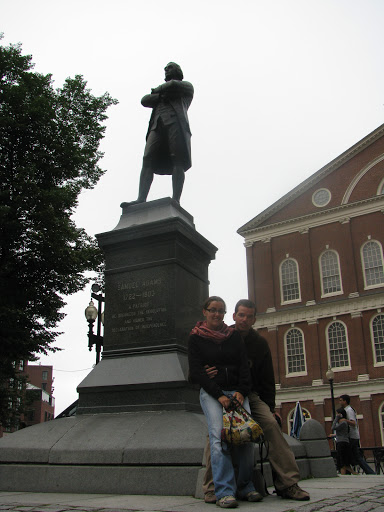
The Boston Tea Party is an example of the protest spirit of the later pre-revolutionary period in the 1770s, and the Boston Massacre is a famous incident which escalated the conflict. Actions by patriots such as Sam Adams and John Hancock followed by counter-actions by the Crown were a main reason for the unity of the Thirteen Colonies and the outbreak of the American Revolution. The Battles of Lexington and Concord initiated the American Revolutionary War and were fought in the Massachusetts towns of Concord and Lexington.

Future President George Washington took over what would become the Continental Army after the battle. His first victory was the 11 month Siege of Boston in early 1776, where his successful fortification of Dorchester Heights forced the British to withdraw from Boston on March 17. This day is celebrated in Massachusetts as Evacuation Day.

The Massachusetts Constitution was ratified in 1780.

After independence and during the formative years of independent American government, Shays' Rebellion was an armed uprising in the western half of the state from 1786 to 1787. The rebels were mostly small farmers angered by crushing war debt and taxes.

On March 15, 1820, Maine separated from Massachusetts, of which it had been first a contiguous and then a non-contiguous part, and entered the Union as the 23rd state as a result of the ratification of the Missouri Compromise.

During the 19th century, Massachusetts and the New England region became a national and world leader in the Industrial Revolution, with the development of machine tools and textiles. The economy transformed from primarily agricultural to industrial, initially making use of its many rivers, and later the steam engine to power factories for textiles, shoes, furniture, and machinery that drew labor from Yankees on subsistence farms at first, and later drew upon immigrant labor from Canada and Europe.

Horace Mann made the state system of schools the national model. Henry David Thoreau and Ralph Waldo Emerson made major contributions to American thought. Members of the Transcendentalism movement, they emphasized the importance of the natural world to humanity.

In the years leading up to the Civil War, Massachusetts was a center of social progressivism, the temperance movement, and abolitionist activity within the United States. Antagonism to these views resulted in anti-abolitionist riots in Massachusetts between 1835 and 1837. The works of abolitionists contributed to subsequent actions of the state during the Civil War. Massachusetts was the first U.S. state to abolish slavery, in a 1783 judicial interpretation of its 1780 constitution, and was the first state to recruit, train, and arm a Black regiment with White officers, the 54th Massachusetts Volunteer Infantry. The Robert Gould Shaw Memorial in Boston Common contains a relief depicting the 54th regiment.

Massachusetts would establish itself as a leader in education and innovation during this time. Alexander Graham Bell invented his telephone in Boston in 1876.

The industrial economy began a decline in the early twentieth century with the exodus of many manufacturing companies. By the 1920s competition from the South, followed by the Great Depression, led to the collapse of Massachusetts' two main industries, textiles and shoes, although a few companies would survive into the 1950s. In the years following World War II, Massachusetts was transformed from a factory system to a largely service and high-tech based economy. Some manufacturing does exist in the State today, generally in specialized markets.

Government contracts, private investment, and research facilities led to a new and improved industrial climate, with reduced unemployment and increased per capita income. Suburbanization flourished, and by the 1970s, the Route 128 corridor was dotted with high-technology companies who recruited graduates of the area's many elite institutions of higher education.

The Kennedy family was prominent in Massachusetts politics in the 20th century, especially with President John F. Kennedy in the 1960s. The famous Kennedy Compound is located at Hyannisport on Cape Cod.

In recent years tourism has played an ever-important role in the state's economy, with Boston and Cape Cod being the leading destinations. Other popular tourist destinations include Salem, Plymouth and the Berkshires.

In 1987, the state received federal funding for the Central Artery/Tunnel Project. Known as the "the Big Dig," it was at the time the biggest federal highway project ever approved. Often controversial, with its estimated $14.6 billion price tag, and claims of mismanagement, the Big Dig has changed the face of Downtown Boston, connecting areas that were once divided by elevated highway, and improving traffic conditions.

In 2004, Massachusetts became the first state in the country to legalize same-sex marriage, and the sixth jurisdiction in the world to do so.

On November 4, 2008, citizens of the state voted to decriminalize the possession of marijuana. Effective January 2, 2009, a person, 18 years of age or older, caught with an ounce or less of marijuana may be charged with a $100 fine as well as face confiscation of any marijuana on their person. The violation will only be considered a civil violation. Also on that ballot, the citizens voted to ban greyhound racing in the state.


June 2009

QUEBEC, CANADA

Places that I visited in Quebec:


Quebec city


We had a good time in Quebec where we were to whale watching close to Tadusact, 3 hours north to Quebec city. Even most of the people speak french, you can survive with english.

Quebec is a province in east-central Canada. It is the only Canadian province with a predominantly French-speaking population and the only one whose sole official language is French at the provincial level.

Quebec is Canada's largest province by area and its second-largest administrative division; only the territory of Nunavut is larger. It is bordered to the west by the province of Ontario, James Bay and Hudson Bay, to the north by Hudson Strait and Ungava Bay, to the east by the Gulf of Saint Lawrence and the provinces of Newfoundland and Labrador and New Brunswick. It is bordered on the south by the U.S. states of Maine, New Hampshire, Vermont, and New York. It also shares maritime borders with Nunavut, Prince Edward Island, and Nova Scotia.

Quebec is the second most populous province, after Ontario. Most inhabitants live in urban areas near the Saint Lawrence River between Montreal and Quebec City, the capital. English-speaking communities and English-language institutions are concentrated in the west of the island of Montreal but are also significantly present in the Outaouais, the Eastern Townships, and GaspƩ regions. The Nord-du-QuƩbec region, occupying the northern half of the province, is sparsely populated and inhabited primarily by Aboriginal peoples.

Nationalism plays a large role in the politics of Quebec, and all three major provincial political parties have sought greater autonomy for Quebec and recognition of its unique status. Sovereigntist governments have held referendums on independence in 1980 and 1995. In 2006, the Canadian House of Commons passed a symbolic motion recognizing the "QuƩbƩcois as a nation within a united Canada.

While the province's substantial natural resources have long been the mainstay of its economy, sectors of the knowledge economy such as aerospace, information and communication technologies, biotechnology and the pharmaceutical industry also play leading roles. These many industries have all contributed to helping Quebec become the second most economically influential province, second only to Ontario.

At the time of first European contact and later colonization, Algonquian, Iroquoian and Inuit groups were the peoples that inhabited what is now Quebec. Their lifestyles and cultures reflected the land on which they lived. Seven Algonquian groups lived nomadic lives based on hunting, gathering, and fishing in the rugged terrain of the Canadian Shield: (James Bay Cree, Innu, Algonquins) and Appalachian Mountains (Mi'kmaq, Abenaki). St. Lawrence Iroquoians lived more settled lives, planting squash and maize in the fertile soils of St. Lawrence Valley. The Inuit continue to fish and hunt whale and seal in the harsh Arctic climate along the coasts of Hudson and Ungava Bay. These people traded fur and food and sometimes warred with each other.

Basque whalers and fishermen traded furs with Saguenay natives throughout the 16th century.

The first French explorer to reach Quebec was Jacques Cartier, who planted a cross in 1534 at either GaspƩ or at Old Fort Bay on the Lower North Shore. He sailed into the St. Lawrence River in 1535 and established an ill-fated colony near present-day Quebec City at the site of Stadacona, an Iroquoian village.

Around 1522 - 1523, the Italian navigator Giovanni da Verrazzano convinced King Francis I of France to commission an expedition to find a western route to Cathay (China). Late in 1523, Verrazzano set sail in Dieppe, crossing the Atlantic on a small caravel with 53 men. After exploring the coast of the present-day Carolinas early the following year, he headed north along the coast, eventually anchoring in the Narrows of New York Bay. The first European to discover the site of present-day New York, he named it Nouvelle-AngoulĆŖme in honour of the king, the former count of AngoulĆŖme. Verrazzano’s voyage convinced the king to seek to establish a colony in the newly discovered land. Verrazzano gave the names Francesca and Nova Gallia to that land between New Spain (Mexico) and English Newfoundland.

In 1534, Jacques Cartier planted a cross in the GaspƩ Peninsula and claimed the land in the name of King Francis I. It was the first province of New France. However, initial French attempts at settling the region met with failure. French fishing fleets, however, continued to sail to the Atlantic coast and into the St. Lawrence River, making alliances with First Nations that would become important once France began to occupy the land. French merchants soon realized the St. Lawrence region was full of valuable fur-bearing animals, especially the beaver, an important commodity as the European beaver had almost been driven to extinction. Eventually, the French crown decided to colonize the territory to secure and expand its influence in America.

Samuel de Champlain was part of a 1603 expedition from France that travelled into the St. Lawrence River. In 1608, he returned as head of an exploration party and founded Quebec City with the intention of making the area part of the French colonial empire. Champlain's Habitation de Quebec, built as a permanent fur trading outpost, was where he would forge a trading, and ultimately a military alliance, with the Algonquin and Huron nations. Natives traded their furs for many French goods such as metal objects, guns, alcohol, and clothing.

Hélène Desportes, born July 7, 1620, to the French habitants (settlers) Pierre Desportes and his wife Françoise Langlois, was the first child of European descent born in Quebec.

From Quebec, coureurs des bois, voyageurs and Catholic missionaries used river canoes to explore the interior of the North American continent, establishing fur trading forts on the Great Lakes (Ɖtienne BrĆ»lĆ© 1615), Hudson Bay (Radisson and Groseilliers 1659–60), Ohio River and Mississippi River (La Salle 1682), as well as the Prairie River and Missouri River (de la Verendrye 1734–1738).

After 1627, King Louis XIII of France introduced the seigneurial system and forbade settlement in New France by anyone other than Roman Catholics. Sulpician and Jesuit clerics founded missions in Trois-Rivières (Laviolette) and Montréal or Ville-Marie (Paul Chomedey de Maisonneuve and Jeanne Mance) to convert New France's Huron and Algonkian allies to Catholicism. The seigneurial system of governing New France also encouraged immigration from the motherland.

New France became a Royal Province in 1663 under King Louis XIV of France with a Sovereign Council that included intendant Jean Talon. This ushered in a golden era of settlement and colonization in New France, including the arrival of les "Filles du Roi". The population grew from about 3,000 to 60,000 people between 1666 and 1760. Colonists built farms on the banks of St. Lawrence River and called themselves "Canadiens" or "Habitants". The colony's total population was limited, however, by a winter climate significantly harsher than that found in France; by the spread of diseases; and by the refusal of the French crown to allow Huguenots, or French Protestants, to settle there. The population of New France lagged far behind that of the Thirteen Colonies to the south, leaving it vulnerable to attack.

In 1774, fearful that the French-speaking population of Quebec (as the colony was called) would side with the rebels of the Thirteen Colonies to the south, the British Parliament passed the Quebec Act giving recognition to French law, Catholic religion and French language in the colony; before that Catholics had been excluded from public office and recruitment of priests and brothers forbidden, effectively shutting down Quebec's schools and colleges. The first British policy of assimilation (1763–1774) was deemed a failure. Both the petitions and demands of the Canadiens' Ć©lites, and Governor Guy Carleton, played an important role in convincing London to drop the assimilation scheme, but the looming American revolt was certainly a factor. Through the Quebec Act, the Quebec people obtained their first Charter of Rights, which paved the way to later official recognition of the French language and French culture. The act allowed Canadiens to maintain French civil law and sanctioned freedom of religion, allowing the Roman Catholic Church to remain. It also restored the Ohio Valley to Quebec, reserving the territory for the fur trade.

The act, designed to placate one North American colony, had the opposite effect among its neighbors to the south. The Quebec Act was among the Intolerable Acts that infuriated American colonists, who launched the American Revolution. A 1775 invasion by the American Continental Army met with early success but was later repelled at the battle at Quebec City.

After the rebellions, Lord Durham was asked to undertake a study and prepare a report on the matter and to offer a solution for the British Parliament to assess.

The final report recommended that the two provinces of Upper and Lower Canada be united, and that the French speaking population of Lower Canada be assimilated into British culture. Durham’s second recommendation was the implementation of responsible government across the colonies. Following Durham's Report, the British government merged the two colonial provinces into one Province of Canada in 1840 with the Act of Union.


In 1848, Baldwin and LaFontaine, allies and leaders of the Reformist party, were asked by Lord Elgin to form an administration together under the new policy of responsible government. The French language subsequently regained legal status in the Legislature.

In the 1860s, the delegates from the colonies of British North America (Canada, New Brunswick, Nova Scotia, Prince Edward Island, and Newfoundland) met in a series of conferences to discuss self-governing status for a new confederation.

The first Charlottetown Conference took place in Charlottetown, Prince Edward Island followed by the Quebec Conference in Quebec City which led to a delegation going to London, Britain, to put forth a proposal for a national union.

As a result of those deliberations, in 1867 the Parliament of the United Kingdom passed the British North America Act, providing for the Confederation of most of these provinces.


June 2009

ONTARIO, CANADA

Places which we visited:

Toronto

Ottawa

Ontario was our fist destination in Canada and with Quebec the only two states that we visited, at least in this tryp, June 2009.

Ontario is a province located in east-central Canada, the largest by population and second largest, after Quebec, in total area. Ontario is bordered by the provinces of Manitoba to the west and Quebec to the east, and the U.S. states (from west to east) of Minnesota, Michigan, Ohio and Pennsylvania, and New York to the south and east. Most of Ontario's borders with the United States are natural, starting at the Lake of the Woods and continuing through four of the Great Lakes: Superior, Huron , Erie, and Ontario, then along the Saint Lawrence River near Cornwall. Ontario is the only Canadian province that borders the Great Lakes. For analytical purposes Ontario is often broken into two regions, Northern Ontario, and Southern Ontario.

The capital of Ontario is Toronto, Canada's most populous city and metropolitan area. Ottawa, the capital of Canada, is located in Ontario as well. The 2006 Census counted 12,960,282 residents in Ontario, which accounted for 38.5% of the national population.

The province takes its name from Lake Ontario, which is thought to be derived from OntarĆ­:io, a Huron (Wyandot) word meaning "great lake", or possibly skanadario which means "beautiful water" in Iroquoian. Along with New Brunswick, Nova Scotia and Quebec, Ontario is one of the four original provinces of Canada when the federal nation was created July 1, 1867, when the British North America Act, 1867 (or 'BNA') came into force. Upon achievement of full independence from the United Kingdom in 1982, the BNA was re-christened the Constitution Act, 1867.

Ontario is Canada's leading manufacturing province accounting for 52% of the total national manufacturing shipments in 2004. Ontario's largest trading partner is the American State of Michigan.

Before the arrival of the Europeans, the region was inhabited both by Algonquian in the western portions and Iroquois and Wyandot (Huron) tribes more in the east. The French explorer Ɖtienne BrĆ»lĆ© explored part of the area in 1610-12. The English explorer Henry Hudson sailed into Hudson Bay in 1611 and claimed the area for England, but Samuel de Champlain reached Lake Huron in 1615, and French missionaries began to establish posts along the Great Lakes. French settlement was hampered by their hostilities with the Iroquois, who allied themselves with the British.

The British established trading posts on Hudson Bay in the late 17th century and began a struggle for domination of Ontario. The 1763 Treaty of Paris ended the Seven Years' War by awarding nearly all of France's North American possessions (New France) to Britain. The region was annexed to Quebec in 1774. From 1783 to 1796, the Kingdom of Great Britain granted United Empire Loyalists leaving the United States following the American Revolution 200 acres of land and other items with which to rebuild their lives. This measure substantially increased the population of Canada west of the St. Lawrence-Ottawa River confluence during this period, a fact recognized by the Constitutional Act of 1791, which split Quebec into the Canadas: Upper Canada southwest of the St. Lawrence-Ottawa River confluence, and Lower Canada east of it. John Graves Simcoe was appointed Upper Canada's first Lieutenant-Governor in 1793.

Once constituted as a province, Ontario proceeded to assert its economic and legislative power. In 1872, the lawyer Oliver Mowat became Premier of Ontario and remained as premier until 1896. He fought for provincial rights, weakening the power of the federal government in provincial matters, usually through well-argued appeals to the Judicial Committee of the Privy Council. His battles with the federal government greatly decentralized Canada, giving the provinces far more power than John A. Macdonald had intended. He consolidated and expanded Ontario's educational and provincial institutions, created districts in Northern Ontario, and fought to ensure that those parts of Northwestern Ontario not historically part of Upper Canada (the vast areas north and west of the Lake Superior-Hudson Bay watershed, known as the District of Keewatin) would become part of Ontario, a victory embodied in the Canada (Ontario Boundary) Act, 1889. He also presided over the emergence of the province into the economic powerhouse of Canada. Mowat was the creator of what is often called Empire Ontario.

Beginning with Sir John A. Macdonald's National Policy (1879) and the construction of the Canadian Pacific Railway (1875-1885) through Northern Ontario and the Canadian Prairies to British Columbia, Ontario manufacturing and industry flourished. However, population increase slowed after a large recession hit the province in 1893, thus slowing growth drastically but only for a few short years. Many newly arrived immigrants and others moved west along the railroad to the Prairie Provinces and British Columbia, sparsely settling Northern Ontario.

Mineral exploitation accelerated in the late 19th century, leading to the rise of important mining centres in the northeast like Sudbury, Cobalt and Timmins. The province harnessed its water power to generate hydro-electric power and created the state-controlled Hydro-Electric Power Commission of Ontario, later Ontario Hydro. The availability of cheap electric power further facilitated the development of industry. The Ford Motor Company of Canada was established in 1904. General Motors Canada was formed in 1918. The motor vehicle industry would go on to become the most lucrative industry for the Ontario economy during the 20th century.

In July 1912, the Conservative government of Sir James Whitney issued Regulation 17 which severely limited the availability of French-language schooling to the province's French-speaking minority. French Canadians reacted with outrage, journalist Henri Bourassa denouncing the "Prussians of Ontario". It was eventually repealed in 1927.

Influenced by events in the United States, the government of Sir William Hearst introduced prohibition of alcoholic drinks in 1916 with the passing of the Ontario Temperance Act. However, residents could distil and retain their own personal supply, and liquor producers could continue distillation and export for sale, which allowed this already sizable industry to strengthen further and Ontario became a hotbed for the illegal smuggling of liquor into the United States, which was under complete prohibition. Prohibition in Ontario came to an end in 1927 with the establishment of the Liquor Control Board of Ontario by the government of Howard Ferguson. The sale and consumption of liquor, wine, and beer are still controlled by some of the most extreme laws in North America to ensure that strict community standards and revenue generation from the alcohol retail monopoly are upheld. In April 2007, Ontario Member of Provincial Parliament Kim Craitor suggested that local brewers should be able to sell their beer in local corner stores; however, the motion was quickly rejected by Premier Dalton McGuinty.

The post-World War II period was one of exceptional prosperity and growth. Ontario, and the Greater Toronto Area in particular, have been the recipients of most immigration to Canada, largely immigrants from war-torn Europe in the 1950s and 1960s and after changes in federal immigration law, a massive influx of non-Europeans since the 1970s. From a largely ethnically British province, Ontario has rapidly become very culturally diverse.

The nationalist movement in Quebec, particularly after the election of the Parti QuƩbƩcois in 1976, contributed to driving many businesses and English-speaking people out of Quebec to Ontario, and as a result Toronto surpassed Montreal as the largest city and economic centre of Canada. Depressed economic conditions in the Maritime Provinces have also resulted in de-population of those provinces in the 20th century, with heavy migration into Ontario.

Ontario has no official language, but English is considered the de facto language. Numerous French language services are available under the French Language Services Act of 1990 in designated areas where sizable francophone populations exist.


June 2009

QUEBEC CITY, QUEBEC


Personally is the most beautifull city in Canada, at least where I've been and the one with more history.

QuĆ©bec is the capital of the Canadian province of Quebec and is located within the Capitale-Nationale region. It is the second most populous city in the province – after Montreal, about 233 kilometres (145 mi) to the southwest. As of the 2006 Canadian Census, the city has a population of 491,142, and the metropolitan area has a population of 715,515.

The narrowing of the Saint Lawrence River approximate to Quebec City and LƩvis, on the opposite bank, provided the name given to the city, KƩbec, an Algonquin word meaning "where the river narrows". Founded in 1608 by Samuel de Champlain, Quebec City is one of the oldest cities in North America. The ramparts surrounding Old Quebec (Vieux-QuƩbec) are the only remaining fortified city walls in the Americas north of Mexico, and were declared a World Heritage Site by UNESCO in 1985 as the 'Historic District of Old QuƩbec'.

Quebec City is internationally known for its Summer Festival, Winter Carnival, and the Château Frontenac, a hotel which dominates the city skyline. The National Assembly of Quebec (provincial parliament), the Musée national des beaux-arts du Québec (National Museum of Fine Arts of Quebec), and the Musée de la civilisation (Museum of Civilization) are found within or near Vieux-Québec. Among the other attractions near the city are Montmorency Falls and the Basilica of Sainte-Anne-de-Beaupré in the town of Sainte-Anne-de-Beaupré.

Quebec City is one of the oldest European settlements in North America. While many of the major cities in Mexico date from the sixteenth century, among cities in the U.S. and Canada only St. John's, Newfoundland and Labrador; Port Royal, Nova Scotia; St. Augustine, Florida; Santa Fe, New Mexico; Jamestown, Virginia and Tadoussac, Quebec were created earlier than Quebec City. However, Quebec City is the first to have been founded with the goal of receiving permanent settlement, and not as a commercial outpost, and therefore is considered to be the first European-built city in non-Spanish North America. Quebec was founded by Samuel de Champlain on 3 July 1608 at the site of a long abandoned St. Lawrence Iroquoian settlement called Stadacona. It was to this settlement that the name "Canada" refers. Although called the cradle of the Francophone population in North America, the Acadian settlement at Port-Royal antedates it. The place seemed favourable to the establishment of a permanent colony.

Before Champlain, French explorer Jacques Cartier built a fort at the site in 1535, where he stayed for the winter before going back to France in spring 1536. He came back in 1541 with the goal of building a permanent settlement. This first settlement was abandoned less than one year after its foundation, in the summer 1542, due in large part to the hostility of the natives combined with the harsh living conditions during winter.

Quebec City was captured by the British in 1759 and held until 1763. It was the site of the Battle of the Plains of Abraham during the Seven Years' War, in which British troops under General James Wolfe defeated the French general Louis-Joseph de Montcalm and took the city. France ceded New France, including the city, to Britain in 1763.

At the end of French rule in 1763, the territory of present-day Quebec City was a world of contrasts. Forests, villages, fields and pastures surrounded the town of 8 000 inhabitants. The town distinguished itself by its monumental architecture, fortifications, muddy and filthy streets, affluent homes of masonry and shacks in the suburbs St-Jean and St-Roch. Despite its urbanity and its status as capital, Quebec City remained a small colonial city with close ties to its rural surroundings. Nearby inhabitants traded their farm surpluses and firewood for imported goods from France at the two city markets.

During the American Revolution, revolutionary troops from the southern colonies assaulted the British garrison in an attempt to 'liberate' Quebec City now known as the Battle of Quebec. The defeat of the revolutionaries from the south put an end to the hopes that the peoples of Quebec would rise and join the American Revolution so that Canada would join the Continental Congress and become part of the original United States Of America along with the other British colonies of continental North America. In effect, the outcome of the battle would be the effective split of British North America into two distinct political entities. Following the battle, Major General Isaac Brock further fortified Quebec City by strengthening the walls and building an elevated artillery battery known as the Citadelle of Quebec before the War of 1812. A series of Martello towers was also built on elevated terrain beyond the city walls to provide further artillery support effectively turning the city into a fortress. In the end, the city was not attacked during the war of 1812 but continued to house a large British garrison until 1871. The Citadel is still in use by the military and three of the Martello towers are still maintained as museums and tourist attractions.

In 1840, after the Province of Canada was formed, the role of capital was shared between Kingston, Montreal, Toronto, Ottawa and Quebec City (from 1852 to 1856 and from 1859 to 1866). In 1867, Ottawa (which was chosen to be the permanent capital of the Province of Canada) was chosen to be the capital of the Dominion of Canada. The Quebec Conference on Canadian Confederation was held here.

Quebec City was struck by the 1925 Charlevoix-Kamouraska earthquake.

During World War II, two conferences were held in Quebec City. The First Quebec Conference was held in 1943 with Franklin Delano Roosevelt (the United States' president at the time), Winston Churchill (the United Kingdom's prime minister), William Lyon Mackenzie King (Canada's prime minister) and T.V. Soong (China's minister of foreign affairs). The Second Quebec Conference was held in 1944, and was attended by Churchill and Roosevelt. They took place in the buildings of the Citadelle and of nearby Château Frontenac. A large part of the D-Day Landings plans were made during those meetings.

Throughout its over four hundred years of existence, Quebec City has served as a capital. From 1608 to 1627 and 1632 to 1763, it was capital of French Canada and all of New France; from 1763 to 1791, it was the capital of the Province of Quebec; from 1791 to 1841, it was the capital of Lower Canada; from 1852 to 1856 and from 1859 to 1866, it was capital of the Province of Canada; and since 1867, it has been capital of the Province of Quebec. The administrative region in which Quebec City is situated is officially referred to as the La capitale nationale and the term 'national capital' has been used to refer to Quebec City itself in one provincial statute.
June 2009

MONTREAL, CANADA

Montreal was our firt destinantion in Quebec province where people start to speak french and don't to do so with english.

Montreal, is the largest city in the Canadian province of QuƩbec and the second-largest city in Canada. Montreal was the largest city in Canada until 1976 when it was surpassed in size by Toronto. Originally called Ville-Marie ('City of Mary'), the city takes its present name from Mont-Royal, the three-headed hill at the heart of the city, whose name was also initially given to the island on which the city is located, or Mont RƩal as it was spelled in Middle French, (Mont Royal in present French).

The official language of Montreal is French as defined by the city's charter. Montreal is the second-largest primarily French-speaking city in the world, after Paris. As of the 2006 Canadian Census, 1,620,693 people resided in the city of Montreal proper, ranking it the 2nd largest city in Canada and 6th overall in North America. The population of the Montreal Census Metropolitan Area (also known as Greater Montreal) was 3,635,571 at the same 2006 census. In the census metropolitan area, French is the language most spoken at home by 70.5% of the population (as of 2006 census).

There is archaeological evidence of various nomadic native peoples occupying the island of Montreal for at least 2,000 years before the arrival of Europeans. The St. Lawrence Iroquoians established the village of Hochelaga at the foot of Mount Royal. The French explorer Jacques Cartier visited Hochelaga on October 2, 1535, claiming the St. Lawrence Valley for France. He estimated the population to be "over a thousand".

Seventy years later, French explorer Samuel de Champlain reported that the St. Lawrence Iroquoians and their settlements had disappeared altogether from the St. Lawrence valley, likely due to inter-tribal wars, European diseases and out-migration. Champlain established in 1611 a fur trading post on the Island of Montreal, on a site initially named La Place Royale, at the confluence of Saint-Pierre River and St. Lawrence River, where present-day Pointe-à-Callière stands. In 1639, JérÓme Le Royer de La Dauversière obtained the Seigneurial title to the Island of Montreal in the name of the Société de Notre-Dame de Montréal to establish a Roman Catholic mission for evangelizing natives. Paul Chomedey de Maisonneuve was the governor of the colony.

Ville-Marie became a centre for the fur trade and a base for further French exploration in North America. It remained a French colony until 1760, when it was surrendered to Great Britain.

Montreal was incorporated as a city in 1832. The opening of the Lachine Canal permitted ships to bypass the unnavigable Lachine Rapids, while the construction of the Victoria Bridge established Montreal as a major railway hub. By 1860, it was the largest city in British North America and the undisputed economic and cultural centre of Canada.

Montreal was the capital of the Province of Canada from 1844 to 1849, but lost its status when a Tory mob burnt down the Parliament building to protest the passage of the Rebellion Losses Bill.

After World War I, the Prohibition movement in the United States turned Montreal into a haven for Americans looking for alcohol. Unemployment remained high in the city, and was exacerbated by the Stock Market Crash of 1929 and the Great Depression.

During World War II, Mayor Camillien Houde protested against conscription and urged Montrealers to disobey the federal government's registry of all men and women. Ottawa was furious over Houde's insubordination and held him in a prison camp until 1944, when the government was forced to institute conscription (see Conscription Crisis of 1944).

By 1951, Montreal's population had surpassed one million people. The Saint Lawrence Seaway opened in 1959, allowing vessels to bypass Montreal: a development that would in time help to spell the end of the city's economic dominance. However, the 1960s saw continued growth, including Expo 67, the construction of Canada's tallest skyscrapers, new expressways and the Montreal Metro system.

The 1970s ushered in a period of wide-ranging social and political changes, stemming in large part from the concerns of the French-Canadian majority about the conservation of their culture and language, given the traditional predominance of the English-Canadian minority in the business arena. The October Crisis and the election of the separatist political party, the Parti QuƩbƩcois, resulted in the departure of many businesses and people from the city. In 1976, Montreal was the host of the 1976 Summer Olympics.

During the 1980s and early 1990s, Montreal experienced a slower rate of economic growth than many other major Canadian cities. By the late 1990s, however, Montreal's economic climate had improved, as new firms and institutions began to fill the traditional business and financial niches.

Montreal was merged with the 27 surrounding municipalities on the Island of Montreal on January 1, 2002. The merger created a unified city of Montreal which covered the entire island of Montreal. This move proved unpopular, and several former municipalities, totalling 13% of the population of the island, voted to leave the newly unified city in separate referendums in June 2004. The demerger took place on January 1, 2006, leaving 15 municipalities on the island, including Montreal.
June 2009


------------------------------------------------------------------------------------------------------ MUCH MORE ------------------------------------------------------------------------------------------------------
Packing List

Subway Maps

Currency Exchange

View Guestbook Sign Guestbook Weather Transportation Accomodation Maps